
The Bylaw State: How Canadian cities use bylaws to govern homelessness
CRAB Park abuts Vancouver’s downtown waterfront, on unceded Indigenous lands that the federal government owns and the city’s park board governs through its bylaws. Through the pandemic, it became a refuge for people with nowhere else to go. In 2022, its residents won an important victory: The British Columbia Supreme Court, in Bamberger, held that the Vancouver Park Board had violated their procedural rights and protected them from displacement. Yet the bylaws stayed on the books. Over time, the bylaws became even more restrictive until, in the end, every resident was removed.
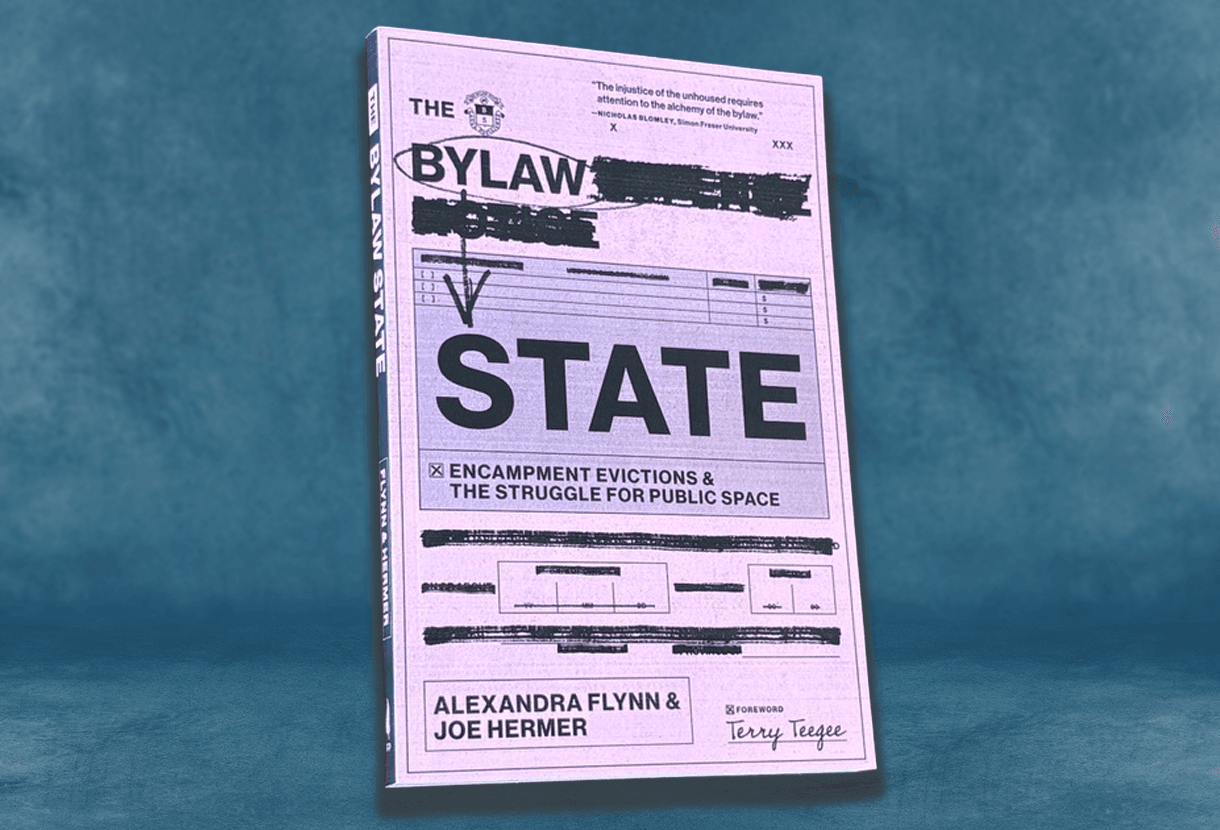
That gap between a hard-won right affirmed in court and the mundane municipal rules used to hollow it out is the subject of my new book with Joe Hermer (University of Toronto Scarborough), The Bylaw State: Encampment Evictions & the Struggle for Public Space. It is also the story of how Canadian cities have come to govern homelessness.
Canada has a housing crisis. But it is not simply a shortage of homes. At its core, the crisis is about affordability and the absence of an enforceable right to housing. Vacancy rates are low, rents climb between tenancies, and Canada lacks at least four million homes. Even middle-class families struggle; for people on low incomes, the situation is dire. A single person on social assistance in Ontario receives far less than the cost of the cheapest available rent. Wages have not kept pace, and setbacks like a job loss, an illness, and an eviction can lead to a lack of secure housing.
Homelessness is the most visible symptom of these failures. In 2024, national counts found close to 60,000 people experiencing homelessness on a single night, more than 17,000 of them sleeping unsheltered: the fastest-growing group, up over 300 per cent since 2018. And the crisis falls hardest on those already marginalized. Indigenous people and 2SLGBTQI+ people are dramatically overrepresented.
We tend to assume people outside simply need a shelter bed. But there are not enough in most communities, and many of them have curfews, no room for partners or pets, nowhere to store belongings, or zero-tolerance drug rules. For survivors of violence and people with complex needs, a bed in a congregate shelter isn’t adequate housing.
So what do cities do? Lacking control over housing policy and the resources to build, they reach for the one tool they have: the bylaw. Bylaws were meant for noise, parking, and park maintenance. They are meant to be neutral rules about places, not people. Increasingly, though, they are used to decide where unhoused people are allowed to exist. Cities restrict camping near playgrounds, flower beds, and slopes, narrowing the map until almost nowhere is left. Officers and police clear camps, issue fines, and move people along. Residents lose what little they have and resettle somewhere equally prohibited. This domino effect does not reduce homelessness; it simply shuffles it out of sight.
We call this “the bylaw state.” Much of it is invisible: rules buried in dense municipal codes, with no signs in the park. A bylaw enforcement form in Nelson, BC, even lists “homeless camp” alongside complaints about snow and noise, as though a human being were one more nuisance to be cleared away. These are, in effect, modern vagrancy laws: small, technical, and seemingly neutral, but adding up to the exclusion of the poor from the city.
Advocates have fought back in court, and they have won real victories since Victoria (City) v Adams in 2009, including the recent Waterloo decision in 2026. But each win tends to invite a new bylaw, and litigation becomes a game of catch-up. No court has ever ordered a city or other government to build housing. None of this means abandoning legal advocacy. It means being honest that the courts alone will not get us there.
In The Bylaw State, we trace the machinery of the bylaw through case studies in Vancouver and Prince George, showing how seemingly minor rules become powerful instruments of displacement. We ask what it would take to move beyond the bylaw state toward cities that confront the real drivers of homelessness to deliver on Canada’s promise of a right to adequate housing.
The Bylaw State: Encampment Evictions & the Struggle for Public Space, by Alexandra Flynn and Joe Hermer, is published by Fernwood Publishing (2026).