
Whither (withering) democracy in Canada
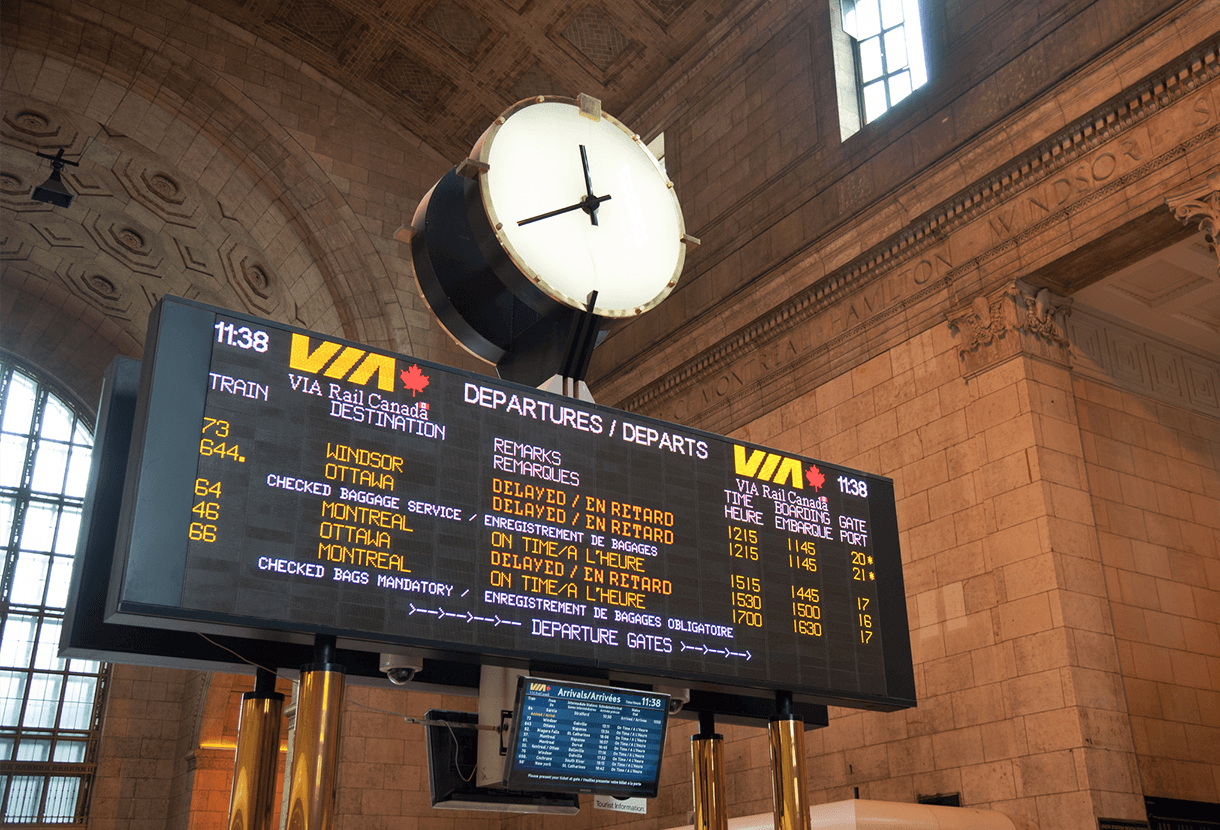
“If the train is always late, what is the point of a train schedule?” asked the late economist Richard Bird. And he’d answer his own question, “If you don’t have a schedule, how do you know the train is late?”
At Maytree we often think about this in our commitment to human rights when people call them unrealistic or aspirational, and when we see even a rich country like Canada fall so far short of supporting a life of dignity for everyone. We think identifying the gap between what we do and how much better we might do is important, so we can develop ways to improve.
There is justifiable concern about the state of our democracy. We are constantly hearing about governments and public institutions breaking laws without repercussions, administrative procedures being employed to prevent oversight and accountability, and secrecy employed to avoid scrutiny. Efforts to shed light on public matters by agents like auditors general grab headlines but are dismissed by politicians and others as mere opinions.
The Ontario government is planning to put elected officials and their staff beyond the scrutiny of freedom of information laws. The Toronto Police Service Board has rigged its agenda procedure to put important matters on meeting agendas too late for public deputations to be mounted, including its $1.4 billion budget request and its response to recent corruption. That board, and other police boards, have also failed their oversight obligation in not disciplining the police service when officers endorse political candidates, as they have done repeatedly. People running prisons routinely flout the laws on inmate treatment, with impunity.
Governments generally accrue power to themselves and resist oversight, particularly if it is awkward or slows things down. The old saw is that it will get sorted out at the next election, but elections are blunt instruments. Elections seldom focus on issues that only affect a minority of people. Governments rarely champion transparency and accountability, except performatively, with a slight nod to their good intentions.
Democracy requires more than governments. It requires a functioning justice system that allows challenges to authority to be heard in a timely fashion. It requires institutions inside and outside government that provide information and analysis, an education system with fair and open inquiry, a responsible media operating in the public interest, and fair voting. Governments can decide who gets to vote and the conditions of voting; for example, they can impose onerous proof of identity requirements. Voting is such a critical part of democracy that who can vote should be free from partisan influence. And democracy requires a parliament of sober thought where issues are fairly debated beyond the practice of whipped sound bites, trick questions, and insults. It requires a network with many parts that are beyond the control of governments and legislatures.
Governments can weaken the elements of democracy by undermining the credibility of the judiciary, underfunding the court system, or by failing to pursue and prosecute law breakers. Opposing a government action through the courts can be costly and time-consuming. Some people won’t start an action because of cost, and the fear of being saddled with defendant costs if they lose their case. And court backlogs mean decisions are often rendered too late to be effective.
In a case involving the Conflict of Interest and Ethics Commissioner of Canada, and brought forward by Democracy Watch, the Supreme Court of Canada is currently considering the constitutionality of “partial privative clauses,” which are sections of legislation that actually prevent judicial oversight of administrative decisions made by agencies, boards, commissions, or tribunals, decisions that can have a profound impact on people’s lives and the protection of fundamental human rights. This case has been almost five years in the making, and the decision is still pending. The decision could be transformative in making administrative justice more accessible and accountable to people.
Canada’s democracy needs a check-up and maintenance. Democracy Watch is undertaking just such a process, looking closely at the fundamental elements of power and influence. It will look at seven key democracy laws to make sure they lead to “honest, ethical, transparent and representative policy-making and decision-making.” Salvator Cusimano of Transparency International Canada has identified gaps in our democracy as well. To some, this may seem idealistic or unrealistic, or even mundane, but in articulating the essential infrastructure for a functioning democracy, it creates the train schedule, so we’ll know how late the trains are. Or, how short of an effective democracy we are, what that gap looks like, and how it might be remedied.
Many people working in the public interest wonder if their work ever matters. They hear a diktat from a political leader that they know is wrong, because their own work on that issue is deeply informed. Their attempts to help, advise, or argue get rebuffed or demeaned as “unrealistic.” Reality can be different to different people.
Our reality, at Maytree and in the community sector, is that the work matters, because it helps to get the train into the station on time. Defining the gap between the train’s schedule and its actual arrival, between saying that each person has a human right to live with dignity and what is actually happening, is vital work. Even if it is an issue that affects only a few people, like those forced to live outdoors in winter, it is work worth doing. Articulating and advocating for solutions matters. Without that, whatever a politician says or a newspaper writes can seem like the best we can do.
Political leaders come in various modes, of different intellects and temperaments. Some seem suited for the serious public business they must lead and, while they must employ some political ways, focus on the job. Others seem less so, less able and serious, more reckless, performative and distracted. A democratic system must be robust enough to deal with each type. It must make government law and policy-making accessible to reasoned public participation. We have a gap to fill in Canada to get that train home in time.